
Updated October 21, 2026
This article provides general information, not legal advice. Requirements depend on the item, location, and circumstances. Consult a qualified firearms attorney about your specific situation.
The latest National Firearms Act developments have raised questions about suppressors, short-barreled rifles, and other regulated firearms. Federal approval and registration procedures have changed significantly. State restrictions remain in place.
For owners and prospective buyers, the key point is straightforward: the new federal guidance does not override state or local law anywhere in the country. Whether a particular item can be purchased, possessed, used, or transported still requires a separate look at those laws.
The change follows the August 5, 2026, decision in Silencer Shop Foundation v. ATF. After Congress reduced the making and transfer taxes to $0 for certain NFA categories, a federal district court blocked enforcement of related provisions against the plaintiffs and other people covered by its order.
On October 9, DOJ and ATF extended their nonenforcement policy nationwide through enforcement discretion. The court’s injunction and the nationwide agency policy have different scopes. Neither amounts to Congress repealing the NFA.
The policy covers four categories:
For those categories, ATF says it will no longer enforce the specified NFA approval, registration, tax-stamp, and related requirements. This changes federal enforcement of the covered provisions; it does not make these items unrestricted.
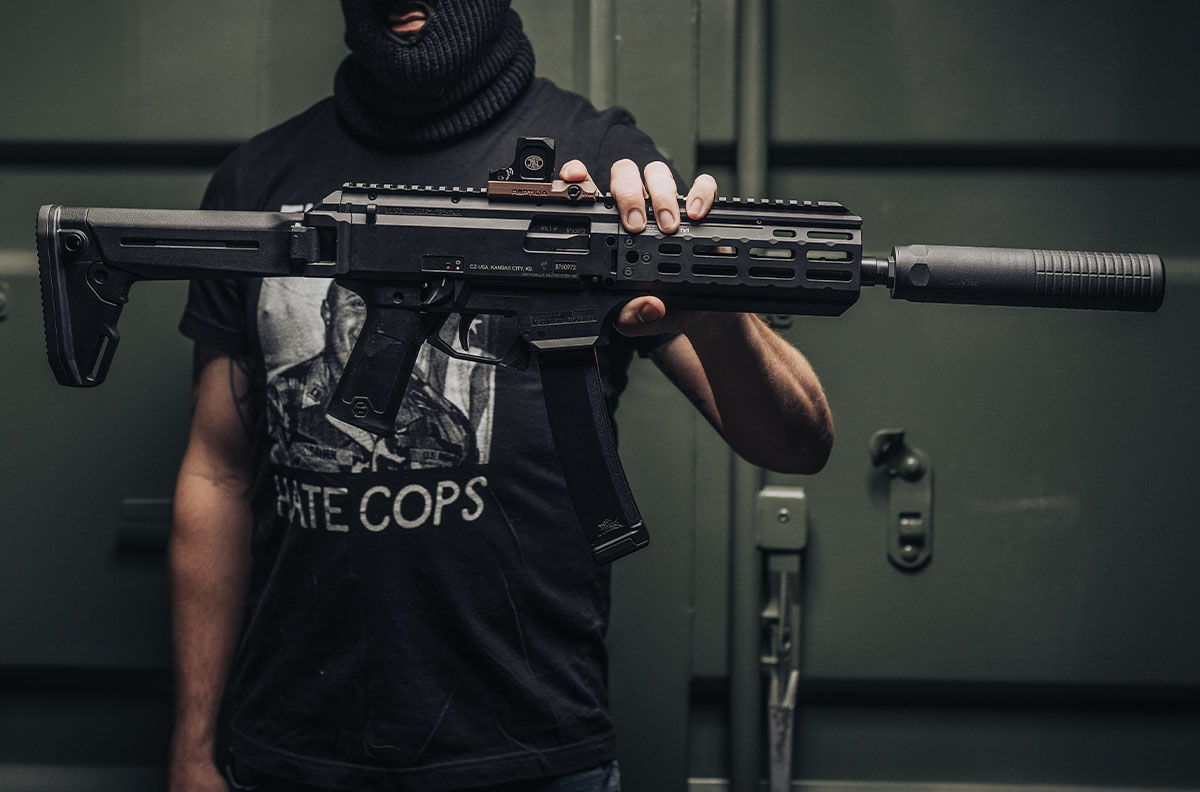
Pictured here is the Reptilia LINK™ FOR CZ® SCORPION EVO W/ MAGPUL® ZHUKOV STOCK – Swapping out the brace? Check it out.
Machine guns and destructive devices remain subject to the full NFA process and applicable $200 tax. Businesses dealing in NFA items still have special occupational tax obligations.
The Gun Control Act also continues to apply. Dealer transactions still require Form 4473 and applicable background checks, and prohibited persons remain prohibited from possessing firearms. ATF continues accepting NFA applications for people who want or need registration.
There is no single list of states excluded from the federal policy. The federal policy applies nationwide, while each state’s separate restrictions continue to operate.
Some states generally prohibit civilian possession of certain items. Others allow possession through an exception that references federal registration, approval, or compliance. Those are different legal conditions, and a change in federal enforcement does not automatically satisfy them.
ATF expressly says it cannot determine whether an unregistered item possessed under its policy qualifies as lawful or registered for purposes of state law. Dealers also remain prohibited from transferring firearms in violation of applicable state or local law.
For suppressors specifically, ordinary civilian ownership remains generally prohibited in these eight states, subject to narrow statutory exceptions:
Washington, D.C., also generally prohibits civilian suppressor ownership. The federal announcement does not remove those restrictions. This list concerns suppressors; SBR, SBS, and AOW rules require separate review.

FFLSafe’s October 20 state-law review identifies the following states as having provisions that connect the legality of at least one covered category to federal registration, authorization, or compliance:
Alabama, Alaska, Arizona, Colorado, Connecticut, Florida, Georgia, Iowa, Kansas, Louisiana, Maryland, Michigan, Minnesota, Mississippi, Missouri, Montana, Nebraska, Nevada, North Carolina, North Dakota, Ohio, Oklahoma, Oregon, Pennsylvania, South Carolina, South Dakota, Vermont, Virginia, Washington, and Wisconsin.
The affected items and statutory wording vary by state. This is a starting point for further review, rather than a determination that every item requires the same paperwork in every listed state.
Several statutes and recent agency notices illustrate why those differences matter:
| State | Restriction or issue that remains |
| Alaska | The Alaska Department of Law says certain state criminal-code defenses remain linked to federal registration. Its October 15 announcement calls for legislative clarification and consultation with prosecutors before charges under the affected statute. That announcement does not repeal the law. |
| Maryland | State Police’s October 15 advisory says SBRs and SBSs still require federal registration. It directs applicants to obtain approval of the appropriate Form 1 or Form 4 before completing the applicable transfer processes. |
| Montana | The attorney general has warned of potential state prosecution involving unregistered suppressors and firearms covered by the state’s sawed-off firearm statute. Suppressor use while hunting also remains tied to ATF registration. |
| North Carolina | The possession exception in G.S. 14-288.8(b)(5) expressly requires compliance with the NFA. The statute covers suppressors and specified short-barreled firearms, among other weapons. |
| Ohio | Suppressors and specified short-barreled firearms fall within the state’s dangerous-ordnance provisions. One principal exemption expressly depends on registration in the federal NFA registry. |
| Washington | State law conditions suppressor use on lawful federal registration and possession. Its SBR exception separately requires compliance with applicable federal law. |
These examples also show why a state described as allowing suppressors may still have registration requirements, use restrictions, or different rules for short-barreled firearms. A state’s absence from a particular list does not establish that a proposed purchase or configuration is lawful.
Interstate travel still requires attention.
ATF says individuals transporting an SBR or SBS across state lines must continue obtaining approval through Form 5320.20, commonly called Form 20, even if the firearm is unregistered.
State restrictions along the route and at the destination also matter. ATF’s open letter specifically identifies uncertainty about how interstate safe-passage protections would apply to unregistered NFA items.
The current policy also carries future uncertainty.
ATF warns that enforcement could resume if legal circumstances change-for example, if Congress imposes a new tax, the injunction is overturned, or DOJ withdraws its guidance.
The agency also states that federal law generally does not permit later registration of unregistered NFA items and provides no automatic grandfathering protection. A future amnesty is discretionary. Owners should not assume they can acquire an unregistered item now and register it later if the rules change.
Existing registration records remain relevant. ATF continues processing voluntary applications, and it warns that an item removed from the registry cannot be registered again without an amnesty. Decisions about pending applications or existing registrations deserve careful review.
Before purchasing, transferring, or traveling with a covered item, confirm its legal classification, the requirements in your state, and the current transfer process with your dealer. For unresolved questions about state-law exceptions or unregistered possession, consult a qualified firearms attorney.
Keep the ATF’s current NFA guidance available alongside your state’s statutes and agency updates. The dates and details matter.
The federal government changed how it enforces some gun laws. State laws still apply.
Think of it as two rulebooks:
You still have to consider both.
The federal government currently says it will stop enforcing certain NFA approval and registration requirements for suppressors, short-barreled rifles, short-barreled shotguns, and a category called “any other weapons.”
(ATF IS STILL GAY)
For example, ordinary civilian suppressor ownership is still generally prohibited in California, Delaware, Hawaii, Illinois, Massachusetts, New Jersey, New York, and Rhode Island, plus Washington, D.C. Other states allow suppressors but may still require federal registration or other conditions. www.capitolarmory.com
Here is what else matters:
The federal policy could also change again. ATF says you should not assume an unregistered item will automatically be protected-or that you can simply register it later-if enforcement resumes. www.atf.gov
Before buying or traveling with an item, check the requirements for that particular item in your state with your dealer and, when needed, a qualified firearms attorney.